
Natural soap is made from oils and lye. Those two things react, and what comes out the other side is soap. The ingredients that go in determine everything about how the finished bar performs - how it lathers, how long it lasts, how it feels on skin, and what it does for the skin's moisture barrier after rinsing.
Here's what's actually in a well-made natural bar and why each ingredient is there.
It Starts With Oils
The base oils are the foundation of the formula. Each one contributes something specific - no single oil does everything well, which is why a balanced formula draws on several.
Coconut oil is the primary driver of lather and cleansing power. Its dominant fatty acid, lauric acid, produces the rich, abundant foam that makes a bar feel like it's working. It also hardens the bar and contributes to longevity. At high concentrations it can be drying - which is why it's always formulated in balance with conditioning oils. What Does Coconut Oil Do in Soap - And Why Formulation Matters
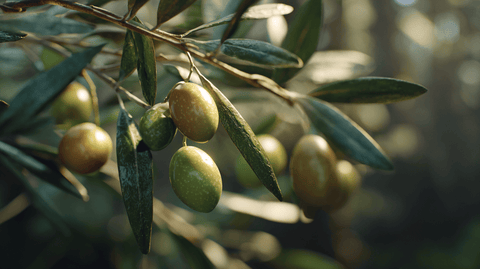
Olive oil is the primary conditioning oil in most cold process formulas. High in oleic acid, it closely mirrors the skin's natural sebum and cleans without stripping. A bar with significant olive oil content feels noticeably different on skin than one built primarily on coconut oil - softer lather, more conditioning, less drying over daily use. What Does Olive Oil Do in Soap - And Why It's Been There for Centuries
Shea butter adds richness, conditioning, and documented anti-inflammatory properties. It's one of the oils most associated with a bar that's genuinely good for skin rather than just functional as a cleanser. What Shea Butter Does for Your Skin - And Why It Belongs in Your Soap
Sustainable palm oil is the structural ingredient - it hardens the bar and stabilizes the lather. Without it, a bar built on soft conditioning oils would be too soft to hold up in a wet shower. Sourcing matters here; palm oil from certified sustainable sources is meaningfully different from conventional palm. What Does Palm Oil Do in Soap - And Why Sourcing Matters
Sunflower oil is lightweight and high in linoleic acid, which reinforces the skin's natural barrier without adding weight or greasiness. It balances the heavier conditioning oils and makes the formula work across a wider range of skin types. What Does Sunflower Oil Do in Soap?
Then Comes Lye
Sodium hydroxide - lye - is the alkali that triggers saponification. When lye contacts the oils, a chemical reaction begins: the lye breaks apart the fat molecules, fatty acids bond with the sodium to form soap, and glycerin is released as a natural byproduct.
Lye doesn't survive the reaction. It's chemically transformed - no sodium hydroxide remains in a properly made finished bar. It's not listed on the ingredient label because it's not in the finished product. What's left is soap and glycerin. How to Make Natural Soap Without Lye - And Why That's Not Actually Possible
Glycerin - The Byproduct That Stays
Saponification produces glycerin alongside soap. In a small-batch cold process bar, that glycerin stays in the finished product - where it acts as a humectant, drawing moisture toward the skin after washing.
Commercial manufacturers extract the glycerin and sell it separately. What goes back into the bar is often a synthetic substitute. The bar cleans, but the element that would support the skin's moisture balance has been removed.
This is one of the most meaningful differences between a well-made natural bar and a commercial one - and it's not visible on the label. You feel it in how your skin behaves after washing. What Is Glycerin in Soap - And Why Does It Matter?
Scent and Anything Extra
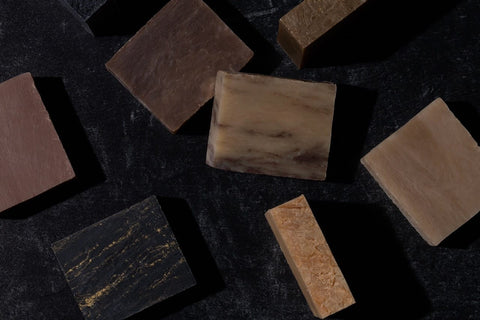
Once the base formula is set, scent is added - either essential oils, fragrance oils, or a combination. Botanical additions like activated charcoal, clays, or oatmeal go in at this stage too, each contributing something specific to the bar's character and skin feel.
Essential oils and fragrance oils both produce genuine scent in a finished bar. The choice between them is driven by the scent profile - some scents are achieved best with essential oils, others require fragrance oils to get the character right. In both cases, quality matters more than source.
The Cure
After the soap is poured into molds, it needs several weeks to cure. Water evaporates, the bar hardens, and saponification completes fully. A bar cut too early is softer, harsher, and less stable than one that's been given time.
The cure is the part most commercial production skips or shortens. It's also the part that most directly affects how the bar performs in the shower.
The Bearsville Bars
Born in the Catskill Mountains, where the landscape is rugged, the air is fresh, and craftsmanship counts for something. Bearsville Soap Company has been at this for over a decade - cold process, small-batch, glycerin intact. One bar at a time, one customer at a time. No shortcuts, no fillers, no corners cut.
Once you go real, you never go back.