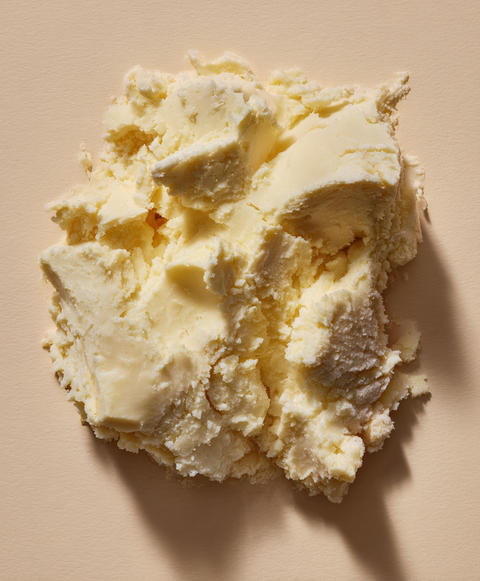

Shea butter is a natural fat extracted from the nuts of the shea tree. In soap, it acts as a conditioning agent that moisturizes skin during washing, contributes to a dense creamy lather, and helps harden the bar. Its fatty acid profile — oleic, stearic, linoleic, and palmitic acids — makes it one of the more complete moisturizing ingredients in a natural soap formula.
It shows up on a lot of ingredient lists without much explanation. Most men have no idea what it actually does — or why a well-made bar of soap should have it. Here's a plain account of why it earns its place.
What Shea Butter Actually Is
Shea butter is extracted from the nuts of the shea tree, native to West Africa. The extraction process — cracking, roasting, grinding, churning — is labor-intensive and largely unchanged from how it's been done for centuries. The result is an ivory-colored butter with a rich, slightly nutty character and a fatty acid profile that's genuinely useful for skin.
The key fatty acids are oleic, stearic, linoleic, and palmitic acids. Each plays a specific role. Oleic acid is deeply conditioning and absorbs readily into skin. Stearic acid adds structure and hardness to a bar. Linoleic acid supports the skin's barrier function. Together, they make shea butter one of the more complete moisturizing ingredients you'll find in a natural formula.
Beyond fatty acids, shea butter also contains vitamins A and E, along with compounds called triterpenes that have documented anti-inflammatory properties. The result is an ingredient that does more than just moisturize — it actively supports the skin's ability to repair and protect itself.
What It Does Inside a Bar of Soap
This is where it gets interesting, because shea butter doesn't just condition skin after the fact — it changes what the soap itself does.
Most of shea butter's fatty acids survive the saponification process, meaning the chemical reaction that turns oils and lye into soap doesn't eliminate them. What remains in the finished bar is a conditioning agent that deposits a fine lipid layer on the skin during washing. That layer mimics the skin's natural sebum — it seals in moisture without clogging pores, which is why a bar made with shea butter rinses clean but doesn't leave skin feeling stripped.
Shea butter also contributes to lather quality. The stearic acid content produces a denser, creamier lather than bars made without it — the kind that feels substantive rather than thin and watery.
And practically speaking: stearic acid hardens a bar. Shea butter is part of why a well-made cold process soap holds its shape, lasts longer in the shower, and doesn't turn soft and mushy after a week on the soap dish.
Why It Works for Men's Skin Specifically
Men's skin is structurally different from women's — it tends to be thicker and oilier, but it also takes more daily abuse. Shaving, sun exposure, outdoor work, and the general tendency to use whatever soap is in the shower without much thought about what it's doing.
Shea butter's anti-inflammatory properties are directly useful here. Shaving creates micro-irritation across the skin surface. A bar that contains shea butter helps calm that response rather than compound it. The oleic acid absorbs quickly and doesn't sit greasy on the surface — which matters for men who aren't interested in a moisturizing "skin routine," just a bar of soap that leaves their skin in decent shape.
The non-comedogenic quality is also worth noting. Shea butter doesn't block pores — relevant for men who wash their face and body with the same bar, and who don't want ingredients that trade one problem for another.
How We Use It
Shea butter is one of the foundational ingredients in our soap formulas. You'll find it across the Bearsville line — it's part of what gives our bars their density, their lather quality, and the conditioning feel that's noticeably different from a commercial bar.
It works alongside the other base oils — coconut oil for lather volume, olive oil for gentle cleansing, castor oil for lather stability — each one doing a specific job. Shea butter's job is conditioning and structure. It does both well.
If you want to see the ingredients we rely on most, here's a closer look at what goes into our bars. And if you're ready to try one, start with the collection.