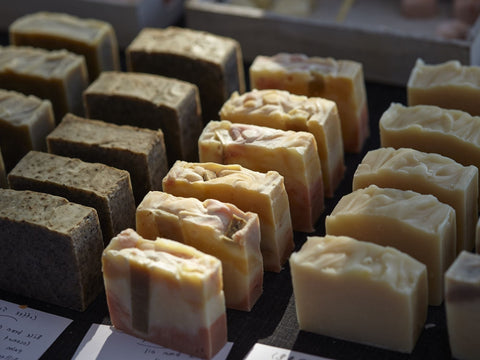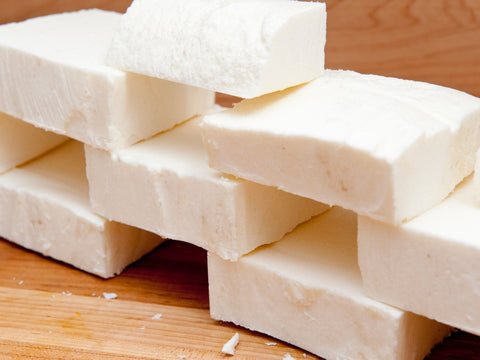

Natural soap cannot be made without lye. There is no workaround, no alternative process, no plant-based substitute that replicates what lye does in saponification. If a bar of soap exists, lye was involved in making it - either directly or in the production of a pre-made soap base that someone else used.
That's the honest answer. Here's why it matters - and what "lye-free" actually means when you see it on a label.
What Lye Does That Nothing Else Can
Lye - sodium hydroxide for solid bar soap, potassium hydroxide for liquid soap - is the alkali that triggers saponification. When lye contacts oils or fats, a chemical reaction begins: the lye breaks apart the fat molecules, the fatty acids bond with the sodium to form soap, and glycerin is released as a natural byproduct.
Without lye, that reaction doesn't happen. Oils stay oils. There's no soap molecule, no lather, no cleaning ability. Every bar of real soap that has ever existed was made with lye - from ancient recipes to modern cold process. The chemistry hasn't changed because it doesn't need to.
What "Lye-Free" Actually Means
When a brand claims their soap is lye-free, one of two things is true.
The bar is made from a melt-and-pour soap base. Pre-made soap bases are widely available - blocks of already-saponified soap that can be melted, scented, colored, and poured into molds without handling lye directly. The end product is still soap. Lye was still used to make the base. The claim is technically accurate in the narrow sense that the person making the bar didn't handle lye - but it's misleading in the broader sense that lye was essential to producing the product.
The bar isn't actually soap. Synthetic detergent bars - the kind that dominate supermarket shelves - are made without saponification. No lye required, because no real soap is being made. Sodium laureth sulfate and similar compounds are produced through industrial chemical processes that don't involve lye. The result cleans, but it's not soap in the traditional sense - and it doesn't have the conditioning properties that saponified plant oils carry. What Is Soap? The Real Answer
Why Lye Isn't Something to Fear
The word "lye" has accumulated a reputation that outlasts its presence in finished soap. Sodium hydroxide is caustic - it requires careful handling during the soapmaking process and can cause burns on contact. That part is true.
What's also true is that lye doesn't survive saponification. The reaction between lye and oils is complete - no sodium hydroxide remains in a properly made bar. It's not diluted or neutralized; it's chemically transformed into something else entirely. The lye did its job and ceased to exist as lye.
This is why lye doesn't appear on soap ingredient labels. Its absence isn't an omission - it's accurate. A bar that lists saponified coconut oil, saponified olive oil, and saponified shea butter is telling you exactly what's in it. The "saponified" prefix is the record of what the lye did. What Is Saponification?
What to Look for Instead
The lye question is a red herring. What matters isn't whether lye was used - it always was - but what's in the finished bar.
A short ingredient list of saponified plant oils, with no synthetic detergents, parabens, or artificial additives, is what a genuinely natural bar looks like. The lye that made it is gone. What remains is soap, glycerin, and the conditioning properties of whatever oils went into the formula. Is Your Bar Soap Actually Natural?
The Bearsville Bars
Born in the Catskill Mountains, where the landscape is rugged, the air is fresh, and craftsmanship counts for something. Bearsville Soap Company has been at this for over a decade - cold process, small-batch, glycerin intact. One bar at a time, one customer at a time. No shortcuts, no fillers, no corners cut.
Once you go real, you never go back.