
That tight, dry feeling after washing isn't clean — it's your skin telling you something was taken that shouldn't have been. The sensation comes from a disrupted moisture barrier, and the soap you're using is almost always the cause.
Here's what's happening and what to do about it.
What "Tight" Actually Means
Skin feels tight when its natural moisture barrier has been stripped. That barrier — the acid mantle — is a thin layer of oils, sweat, and moisture that sits on the skin's surface, keeping water in and irritants out. It has a slightly acidic pH, typically between 4.5 and 5.5.
When that barrier is disrupted, the skin loses moisture faster than it can replace it. The result is a feeling of tightness, sometimes accompanied by dryness, flaking, or a faint pulling sensation when you move your face or hands.
Why Soap Causes It
Most conventional bars are built on synthetic detergents with a pH significantly higher than skin's natural range. That alkalinity disrupts the acid mantle with every wash, stripping not just dirt but the natural oils your skin needs to stay hydrated.
The detergents themselves compound the problem. Sodium laureth sulfate and similar compounds are effective at removing oil — they don't distinguish between the sebum you want gone and the sebum your skin is using to protect itself. Regular use of high-detergent bars on already-compromised skin creates a cycle: wash, strip, tighten, repeat.
The Glycerin Factor
Here's what makes the difference in a natural bar: glycerin.
Saponification — the chemical reaction that produces soap — also produces glycerin. In cold process natural soap, that glycerin stays in the bar. It's a humectant, which means it draws moisture from the environment toward the skin and helps hold it there after washing.
Commercial manufacturers extract that glycerin and sell it separately. What remains is a bar that cleans but actively works against the skin's moisture balance. That tight feeling you get after using a conventional bar? That's the absence of glycerin doing its job. What Is Glycerin in Soap?
Other Causes Worth Ruling Out
Soap formula is usually the main culprit, but a few other factors contribute:
Water temperature — hot water feels good but opens the skin and accelerates moisture loss. Cooler water preserves more of the skin's natural oils through a wash.
Over-washing — washing more frequently than necessary strips the barrier before it has time to recover. If you're experiencing tightness, washing once daily rather than twice is worth trying.
Hard water — mineral-heavy water can leave a residue on skin that contributes to tightness and dullness. If you've switched to a natural bar and still experience tightness, hard water may be a factor.
Toweling too aggressively — vigorous rubbing removes moisture that would otherwise absorb back into skin. Patting dry preserves more of what the rinse left behind.
How to Fix It
Switch to a cold process natural bar built on saponified plant oils with glycerin retained. Give it two to three weeks — skin that has been regularly stripped takes time to recalibrate its oil production and rebuild its barrier.
In the interim, applying a light moisturizer while skin is still slightly damp after washing locks in moisture more effectively than applying it to dry skin.
If tightness persists after switching bars, look at water temperature and washing frequency before assuming the new bar isn't working. The formula is usually only one variable. Is Natural Soap Better for Your Skin?
The Bearsville Bars
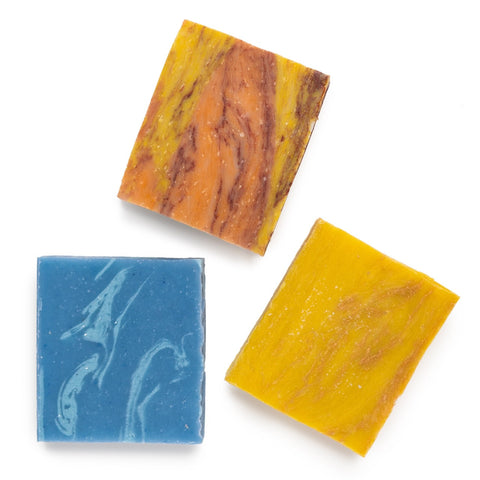
Bearsville bars are cold process, built on saponified organic coconut, olive, and shea butter oils, with glycerin retained. They clean without stripping — which is the straightforward fix for skin that feels tight after washing.