
The right soap for your skin depends on what your skin actually needs — not what the label claims. A bar that works well for oily skin can make dry skin worse. A bar formulated for sensitive skin may not clean thoroughly enough for someone who works with their hands. Skin type is the starting point for making a useful choice.
Here's how to match a natural bar to what your skin is doing.
Dry Skin: Prioritize Conditioning Oils and Retained Glycerin
Dry skin loses moisture faster than it replaces it. The barrier that keeps water in — the acid mantle — is compromised, either chronically or in response to cold weather, hot showers, or harsh cleansers. The wrong bar makes it worse.
What dry skin needs is a bar built on conditioning oils with a high oleic acid content — olive oil and shea butter in particular. Oleic acid closely mirrors the fatty acid composition of human sebum and absorbs readily without sitting on the surface. A bar with a high olive oil content cleans gently and leaves skin softer after washing rather than tighter.
Equally important is glycerin. Cold process soap retains the glycerin produced during saponification — a humectant that draws moisture toward the skin and holds it there. Commercial bars typically extract that glycerin. For dry skin, its presence in the bar makes a meaningful difference. What Is Glycerin in Soap?
Avoid bars with high concentrations of coconut oil — effective at cleansing but drying at high doses — and anything built on synthetic detergents.
Oily Skin: Lean Into Cleansing Without Stripping
Oily skin produces excess sebum — sometimes in response to genetics, sometimes in response to a skin barrier that's been over-stripped and is compensating by producing more oil. Either way, the instinct to use a stronger, more aggressive cleanser often backfires.
Stripping oil aggressively signals the skin to produce more of it. A balanced natural bar that cleans thoroughly without removing everything actually helps regulate oil production over time.
For oily skin, coconut oil-forward bars work well — coconut oil produces abundant lather and cleansing power without the synthetic detergents that trigger rebound oil production. Activated charcoal is a useful addition for oily skin types, binding to excess oil and drawing it out of pores during washing. What Activated Charcoal Does in Soap
Avoid bars with heavy conditioning oils in high concentrations — the extra conditioning isn't needed and may leave oily skin feeling less clean.
Sensitive Skin: Short Ingredient Lists and Low Fragrance Loads
Sensitive skin reacts to variables — specific ingredients, fragrance compounds, pH disruption. The strategy is elimination: the fewer ingredients in the bar, the fewer potential triggers.
A cold process bar built on saponified plant oils with a short, readable ingredient list is the right starting point. Olive oil and shea butter are the most consistently well-tolerated base oils for sensitive skin. Fragrance load matters — a lightly scented bar is a safer choice than a heavily fragranced one, regardless of whether the scent comes from essential oils or fragrance oils.
Watch for synthetic detergents, parabens, artificial colorants, and anything with a long string of chemical names. These are the most common contact irritants in personal care products and have no place in a bar for sensitive skin. Natural Soap for Sensitive Skin
Normal Skin: The Full Range Is Available to You
Normal skin — balanced oil production, no chronic reactivity, no significant dryness — gives you the most flexibility. Any well-made natural bar will work. The choice comes down to scent preference, lather character, and what you want the bar to do beyond basic cleansing.
If you want more conditioning, lean toward olive oil-heavy bars. If you want more lather and cleansing power, coconut oil-forward bars deliver. If you want something in between, a balanced formula across multiple oils is the right call.
Combination Skin: Focus on the Problem Areas
Combination skin — typically oily through the T-zone with drier cheeks and jaw — is the most common skin type and the hardest to optimize for with a single product.
The practical approach: use a balanced bar that doesn't over-strip or over-condition, and address specific areas separately if needed. A bar built on a blend of olive oil, coconut oil, and shea butter covers the middle ground well — cleansing where it needs to cleanse, conditioning where it needs to condition.
The One Thing All Skin Types Have in Common
Regardless of skin type, the bar you're looking for is one built on real saponified oils, retaining its natural glycerin, with a short and readable ingredient list. The specific oil balance shifts depending on what your skin needs — but the foundation is the same. How to Choose a Natural Bar Soap for Men
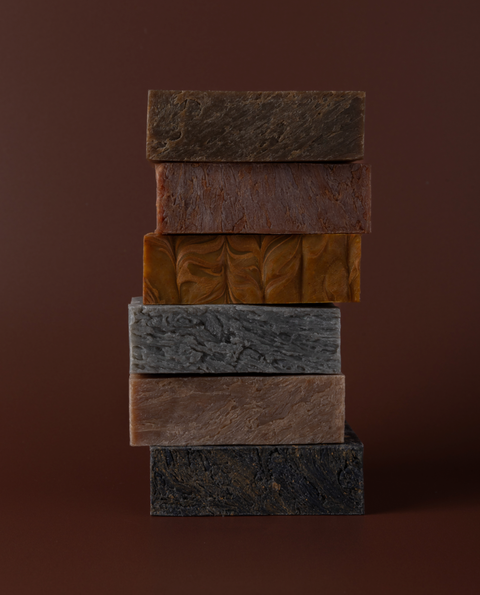
Bearsville bars are cold process, built on organic coconut, olive, and shea butter oils, with glycerin retained. The Big Bear Box includes a range of bars — a practical way to find what works for your skin before committing to a single scent.