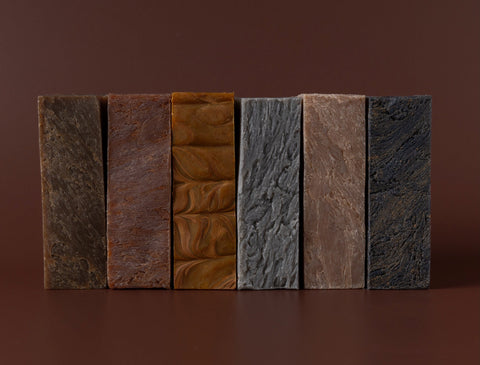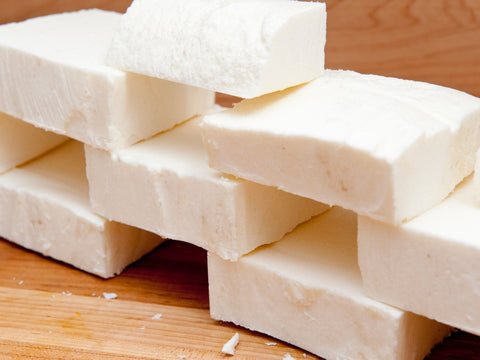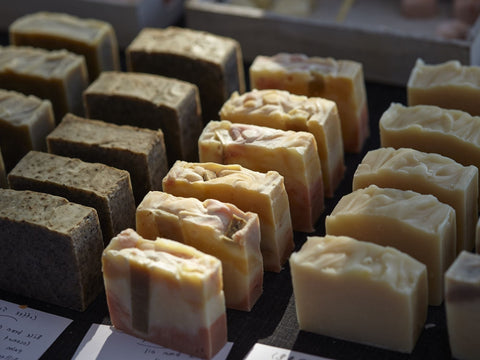

Cold process and hot process are the two main methods for making real soap from scratch. Both use the same fundamental chemistry - oils and lye undergo saponification to produce soap and glycerin. The difference is in how that reaction is managed, how long it takes, and what the finished bar is like as a result.
Cold process is the method that produces the highest quality bar. Here's why.
How Cold Process Works
In cold process soapmaking, oils and lye solution are combined at a controlled temperature and mixed until they reach trace - the point where the mixture has emulsified and saponification has begun. The soap is poured into molds and left to cure for several weeks while the reaction completes naturally.
No external heat is applied after the oils and lye are combined. The saponification reaction generates its own heat - a process called the gel phase - and the bar cures slowly as water evaporates and the soap hardens. The result is a bar where the conditioning properties of the oils are largely preserved, the glycerin stays in, and the formula has time to fully develop before the bar is ready to use.
The curing period is not optional. A bar cut too early is softer, harsher, and less stable than one that has cured fully. Time is part of the formula. What Is Cold Process Soap?
How Hot Process Works
Hot process soapmaking uses the same basic ingredients - oils, lye, water - but applies external heat to accelerate saponification. The mixture is cooked, typically in a slow cooker or oven, until saponification is complete. Because the reaction is driven to completion by heat rather than time, hot process soap can be used almost immediately after it's made - the cure time is significantly shorter.
The tradeoff is in the finished bar. The heat that accelerates saponification also affects the conditioning properties of the oils and can produce a rougher, more rustic texture that's harder to work into smooth, consistent bars. Hot process soap tends to have a chunkier, more uneven appearance and a slightly different skin feel than cold process.
Fragrance and essential oils are added after the cook in hot process - once saponification is complete - which means they don't go through the alkaline reaction. In cold process, fragrance is added at trace and must be stable enough to survive saponification. This gives hot process an advantage for fragrance retention in some cases, though the overall bar quality typically favors cold process.
The Glycerin Question
Both methods produce glycerin as a natural byproduct of saponification. In both cold and hot process soap made by small-batch producers, that glycerin stays in the finished bar - where it acts as a humectant, supporting the skin's moisture balance after washing.
This is what separates both methods from commercial soapmaking, where glycerin is extracted regardless of the production method. The distinction isn't cold process vs. hot process - it's small-batch natural soap vs. commercial manufacturing. What Is Glycerin in Soap?
Which Produces the Better Bar?
Cold process, consistently. The slower cure produces a harder, longer-lasting bar with a smoother texture and better-preserved oil properties. The conditioning characteristics of olive oil, shea butter, and other base oils come through more fully in a cold process bar than in one that's been cooked.
Hot process has its place - it's a legitimate method and produces real soap - but for a bar optimized for skin feel, longevity, and consistency, cold process is the standard that serious soap makers work to.
How Bearsville Makes Its Bars
Bearsville bars are cold process, made in small batches, poured and cut and cured until each bar is ready. The glycerin stays in. The oils are saponified slowly, the way the method is designed to work.
The result is a bar that performs differently than what most men are used to - not because of a single ingredient, but because of the combination of quality oils, retained glycerin, and a process that doesn't take shortcuts. What Is Saponification? How Cold Process Soap Is Actually Made
Browse the full soap collection.