
The word "natural" on a soap label means nothing on its own. The FDA does not define it, does not regulate its use, and has no standard a brand must meet before printing it on packaging. Any company can call any product natural — and many do, regardless of what's actually in the bar.
The only way to know if a soap is genuinely natural is to read the ingredient list. Here's how to do it.
Start With the Base Oils
Real natural soap is made through saponification — a chemical reaction between oils and lye that produces soap and glycerin. The base oils used in that process will appear on the label as "saponified [oil name]" — saponified coconut oil, saponified olive oil, saponified shea butter, and so on.
This is what you want to see. A bar built on saponified plant oils is real soap. The oils determine how the bar performs — how it lathers, how conditioning it is, how long it lasts.
If the first ingredients on the list are sodium laureth sulfate, sodium cocoyl isethionate, or similar synthetic detergents, you're not looking at natural soap. You're looking at a synthetic detergent bar — which cleans, but through an entirely different mechanism, and with a different effect on your skin.
Understand What Lye Means — And Doesn't Mean
Lye, or sodium hydroxide, is required to make real soap. There is no soap without it. During saponification, the lye reacts completely with the oils — no active lye remains in the finished bar, which is why it doesn't appear on the ingredient label. That absence isn't an omission. It's accurate. The lye was consumed in the process of making the soap.
If a brand advertises "lye-free soap," they mean one of two things: either the bar is made from a pre-made soap base (which itself was made with lye), or it's a synthetic detergent bar. Neither is cause for alarm, but neither is natural soap in the traditional sense.
Check How It's Scented
Fragrance is where natural claims get complicated. Essential oils are derived from plants and are a straightforward natural ingredient. Many natural soap makers also use fragrance oils — lab-formulated scent compounds that can deliver a wider range of scents with reliable consistency.
Fragrance oils are not inherently harmful. Quality fragrance oils formulated without phthalates or known irritants are widely used in well-made natural soap. On an ingredient label, they appear simply as "fragrance" — which is standard industry practice, not a red flag.
What you're watching for is a bar that claims to be all-natural while listing synthetic stabilizers, artificial colorants, or preservatives like parabens or BHT alongside that claim. The scent method matters less than what else is in the formula.
Consider the Process
Cold process soap retains the glycerin produced during saponification — a natural humectant that keeps skin from drying out after washing. Commercial manufacturers typically extract that glycerin and sell it separately, leaving a bar that cleans but doesn't condition.
A brand that specifies cold process, describes its oils, and lists a clean ingredient deck is telling you something real about how the bar was made. That transparency is worth something.
What to Do With This Information
You don't need to become an ingredient expert. You need to be able to look at a label and ask three questions: Are the base ingredients real oils? Is the list short and readable? Are there synthetic additives that shouldn't be there?
If the answers are yes, yes, and no — you're holding a natural bar. How to Choose a Natural Bar Soap for Men goes deeper on what to look for once you've cleared that first test.
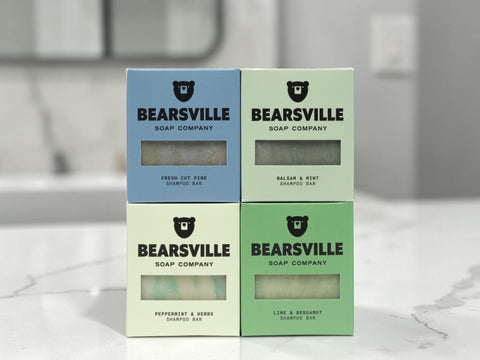
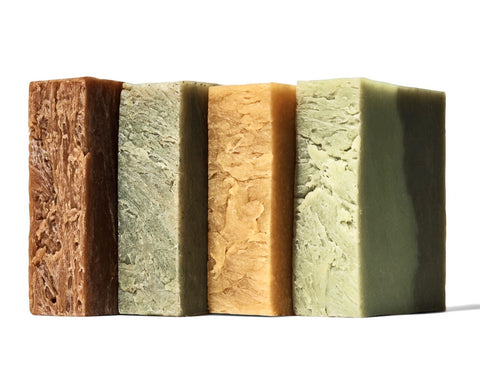
Bearsville bars are built on saponified organic oils — coconut, olive, shea butter, castor — made in small batches using cold process. No parabens, no synthetic detergents, no harsh chemical additives. The ingredient list is short because the formula doesn't need anything else.