
Soap is the product of a chemical reaction between oils and lye. When those two things combine, they undergo a transformation called saponification — and what comes out the other side is something neither of them was going in. Not oil. Not lye. Soap.
Most of what lines the average drugstore shelf isn't soap by that definition. It's a synthetic detergent bar — built on chemical surfactants rather than saponified oils, manufactured through an industrial process that has more in common with making cleaning products than making soap. The FDA doesn't allow these products to be labeled as soap, which is why you'll see terms like "beauty bar," "cleansing bar," or "body bar" on the packaging. The word soap is notably absent.
What Soap Actually Is
Real soap starts with oils and lye. The oils — plant-based, animal-based, or a blend — provide the base. The lye, typically sodium hydroxide for a solid bar, triggers the reaction. When combined at the right temperature and ratio, the molecules bond and transform: the fatty acids in the oil link with sodium to form soap molecules, and glycerin separates out as a natural byproduct.
The result is a compound with a specific and useful property: one end of each soap molecule is attracted to water, the other to oil. That's what makes soap effective. It grabs oil-based dirt and grease, surrounds it, and lets water rinse the whole thing away. No synthetic chemistry required.
What Happens to the Lye
Lye makes some people uneasy. It's caustic during the soapmaking process and requires careful handling. But lye doesn't survive saponification — it reacts completely with the oils and is chemically converted into something else entirely. No active lye remains in a properly made, fully cured bar.
A finished bar of soap contains no lye. It contains soap and glycerin — which is exactly what saponification produces. Understanding this matters because lye-free claims on packaging don't mean the soap was made without lye. They mean it was made correctly.
Why the Oils Matter
The oils used in a soap formula determine what the bar does beyond basic cleansing. Coconut oil produces a rich, dense lather and strong cleaning action. Olive oil is gentle and conditioning — its fatty acids closely mirror the skin's own natural oils. Shea butter adds richness and moisture. Castor oil stabilizes and sustains lather.
A well-formulated natural bar balances these oils so the bar cleans effectively without stripping the skin. That balance is the craft — and it's where handmade soap diverges most clearly from industrial detergent bars, which are formulated for cost efficiency rather than skin performance.
What Commercial Bars Leave Out
During saponification, natural glycerin forms as a byproduct and stays in the finished bar. Glycerin is a humectant — it draws moisture toward skin and helps it retain what's there. In a handmade cold process bar, that glycerin stays put.
Commercial manufacturers extract it. The glycerin gets sold separately for use in lotions and skincare products, and synthetic additives go into the bar to compensate for what's been removed. The bar still cleans. But it doesn't condition — which is why skin often feels tight or dry afterward, and why so many men reach for moisturizer right after showering.
A real bar of soap, made from quality oils with glycerin intact, cleans and conditions in a single step. That's the practical difference — and it's the reason the distinction between soap and detergent is worth understanding.
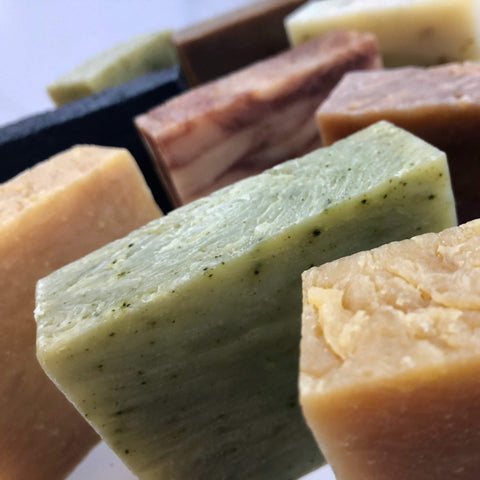
Every Bearsville bar is real soap — cold process, built on saponified organic oils, with glycerin retained. Browse the full soap collection here.