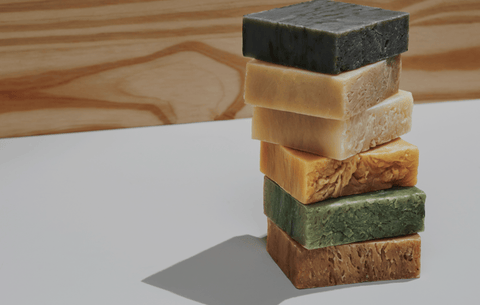

Not all bar soap is created equal. Walk into any drugstore and you'll find shelves of products labeled "soap" that contain detergents, synthetic lather boosters, and preservatives that have no business being on your skin. Choosing a natural bar soap means cutting through that — but it also means knowing what you're actually looking for.
This guide covers the five things worth paying attention to when you pick a natural bar soap. No ranking of brands, no filler. Just what matters and why.
Start With How It's Made
The process behind a bar of soap tells you more than the marketing on the label.
Cold process soap is made by combining oils and lye at a controlled temperature, then allowing the mixture to cure over several weeks. This method preserves the natural glycerin produced during saponification — the chemical reaction that turns oils into soap. Commercial soap manufacturers typically extract that glycerin to sell separately, which is why mass-market bars often leave skin feeling tight or dry. Cold process soap keeps it in.
Hot process soap follows a similar principle but applies heat to speed up the reaction. The bars tend to have a rougher appearance and a shorter cure time. Both methods produce genuine soap — the difference is largely in texture and the degree of control the maker has over the final bar.
If a product doesn't mention how it's made, that's worth noting. Brands that take the process seriously tend to say so.
Read the Ingredient List — All of It
A short ingredient list is a good sign. A long one with chemical names you can't place is worth investigating.
Genuine natural soap will list the oils used in the base — commonly olive oil, coconut oil, shea butter, castor oil, or a combination. Lye, or sodium hydroxide, is required to make real soap — it's what triggers the chemical reaction that turns oils into a bar. Once that process is complete, no active lye remains in the finished product. It won't appear on the label, but knowing it was part of the process is not a reason for concern. It's a reason the bar is real soap.
What you're looking for is a list that reads like ingredients, not a chemistry exam. If a bar leans on synthetic detergents or artificial preservatives like parabens to do its job, it's not a natural bar — regardless of what the packaging says.
Understand How Scent Is Added
Natural soaps are typically scented with essential oils, fragrance oils, or a combination of both. Essential oils are steam-distilled from plants and carry the scent and character of the source material. Quality fragrance oils, when formulated without harsh chemicals or known irritants, offer a wider scent range with the same skin-safe standard.
Consider What Your Skin Actually Needs
Men's skin varies. What works well for one person won't necessarily work for another, and a soap that claims to be right for everyone is making a promise it can't keep.
Dry or sensitive skin generally does better with bars built around moisturizing oils — shea butter and olive oil are both gentle and conditioning. If your skin tends to feel tight after showering, that's usually a sign the soap is stripping more than it should.
Oily or acne-prone skin can benefit from the inclusion of activated charcoal or clay, which draw out impurities without harsh detergents.
Normal skin has more flexibility. The main consideration is avoiding bars with ingredients that are known irritants — synthetic detergents at high concentrations, artificial colorants, or alcohol-based additives.
If you have a specific skin condition, it's worth checking with a dermatologist before switching products. A good natural soap is not a treatment — it's a clean, well-made cleanser.
Know What You're Paying For
A handcrafted natural bar soap costs more than a drugstore bar. That gap reflects real differences — in ingredients, in process, and in what the bar actually does.
Small-batch makers use higher-quality oils, cure their bars properly, and don't cut corners with synthetic fillers. The result is a bar that lathers well, rinses clean, and actually moisturizes — something mass-market bars, stripped of their natural glycerin, simply don't do. When you factor in what you're actually getting, the cost difference tends to make more sense than it looks on the shelf.
That said, price alone doesn't indicate quality. A bar can be expensive and still be poorly formulated. Go back to the ingredient list. Go back to how it's made. Those are the actual indicators.
The Bar You Choose Is Worth Getting Right
Most men don't think twice about what soap they use. That's fine — but it means a lot of men are washing daily with something that's working against their skin without realizing it.
A well-made natural bar soap, built on real oils and an honest process, does the job cleanly and leaves skin in better shape than it found it. Not sure where to start? See our best sellers here. The difference is noticeable, and once you've felt it, the drugstore shelf starts to look like what it is.
The Bearsville Bars
Born in the Catskill Mountains, where the landscape is rugged, the air is fresh, and craftsmanship counts for something. Bearsville Soap Company has been at this for over a decade - cold process, small-batch, glycerin intact. One bar at a time, one customer at a time. No shortcuts, no fillers, no corners cut.
Once you go real, you never go back.
Browse the full soap collection.