
The best natural soap for dry skin is a cold process bar built on conditioning oils - olive, shea butter, and other high-oleic oils - with the glycerin left in. What makes it work for dry skin is what it doesn't do: it cleans without stripping the natural oils that dry skin is already short on. The wrong soap makes dry skin worse with every wash. The right one cleans and conditions in the same step.
Here's what to look for.
Why Conventional Soap Makes Dry Skin Worse
Dry skin doesn't produce enough of the natural oil it needs to stay comfortable and protected. Most conventional bars and body washes make that worse, because they're built on synthetic detergents that strip oil aggressively and indiscriminately.
Every wash with a harsh detergent removes what little oil dry skin has, leaving it tight, flaky, and more reactive. Many conventional bars are also highly alkaline, which disrupts the skin's acid mantle - the protective barrier that helps hold moisture in. For dry skin, that combination is a daily setback. Why Conventional Soap Makes Your Skin Feel Tight - And How to Fix It
The Glycerin Difference
This is the single most important factor for dry skin. Glycerin is a humectant - it draws moisture toward the skin and helps hold it there. Saponification produces glycerin naturally, and in a cold process bar, it stays in.
Commercial manufacturers extract the glycerin and sell it separately, then build the bar back up with synthetic additives. What you're left with is a bar that cleans but doesn't support the skin's moisture. For dry skin, a glycerin-rich cold process bar is doing active good every time you wash - not just cleaning, but conditioning. What Is Glycerin in Soap - And Why Does It Matter?
Ingredients That Help Dry Skin
The oils in the formula determine how a bar treats dry skin. The ones that matter most:
Olive oil - high in oleic acid, which mirrors the skin's natural sebum. It cleans gently and conditions deeply, making it one of the best oils for dry skin. What Does Olive Oil Soap Do for Your Skin?
Shea butter - rich in fatty acids with documented anti-inflammatory properties. It adds richness and conditioning that dry, tight skin benefits from directly.
Coconut milk and goat's milk - when present, both add extra conditioning and a creamier lather that leaves dry skin softer after rinsing.
What to look for overall is a bar built primarily on conditioning oils rather than one heavy on coconut oil alone - coconut oil cleans and lathers well but can be drying at high concentrations without enough conditioning oils to balance it. What Does Coconut Oil Do in Soap - And Why Formulation Matters
What to Avoid
For dry skin specifically:
Synthetic detergent bars - the aggressive stripping is exactly what dry skin can't afford.
Heavy exfoliants - a bar with coarse grit can be too harsh for dry, sometimes flaky skin. Gentle is better. If you exfoliate, keep it light and infrequent.
Heavy fragrance loads - dry skin is often more reactive, and a heavily fragranced bar carries more potential for irritation. A lightly scented bar is the safer choice.
Beyond the Bar
Soap is the foundation, but dry skin benefits from a full approach. Apply a moisturizer immediately after washing, while the skin is still slightly damp, to seal in moisture before it evaporates. Shorter, cooler showers also help - hot water strips oil faster than warm. How to Choose a Natural Daily Moisturizer
The Bearsville Bars
Born in the Catskill Mountains, where the landscape is rugged, the air is fresh, and craftsmanship counts for something. Bearsville Soap Company has been at this for over a decade - cold process, small-batch, glycerin intact. One bar at a time, one customer at a time. No shortcuts, no fillers, no corners cut.
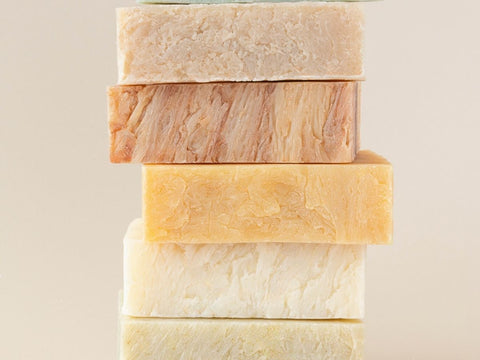
Our bars are built on conditioning oils - olive, shea butter, coconut, and sunflower - with the glycerin left in where it belongs. Gentle enough for dry skin, and conditioning in a way that stripped commercial bars can't match.
Once you go real, you never go back.