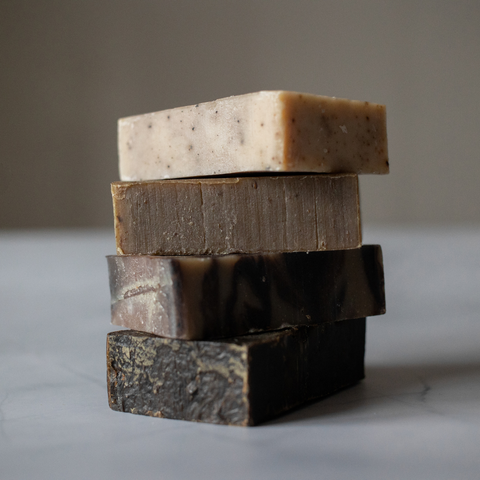
Soap is one of the most effective tools humans have ever developed against infectious disease — not because of any added antibacterial agent, but because of its fundamental molecular structure. A bar of soap and clean water, used properly, disrupts and removes the very architecture that allows viruses and bacteria to function.
Here's what's actually happening.
The Molecular Structure of Soap
Every soap molecule has two distinct ends. One is hydrophilic — attracted to water. The other is hydrophobic — repelled by water and attracted to oils and fats instead.
This dual structure is the source of soap's cleaning ability. In water, soap molecules float freely, interact with each other, and assemble into micelles — tiny spherical structures with hydrophilic heads pointing outward toward the water and hydrophobic tails pointing inward. Those micelles are what trap and carry away dirt, oil, and microorganisms when you rinse.
How Soap Disrupts Viruses and Bacteria
Many dangerous pathogens — including coronaviruses, influenza, hepatitis B and C, herpes, and a range of bacteria — are wrapped in lipid membranes. These membranes are structurally similar to soap micelles: a double layer of molecules with hydrophobic tails sandwiched between hydrophilic outer surfaces.
When soap molecules encounter these lipid-enveloped pathogens, the hydrophobic tails attempt to escape water by inserting themselves into the pathogen's membrane. This destabilizes the membrane structure and causes it to rupture. Proteins essential to the pathogen's ability to infect cells or survive spill out. The virus is rendered inactive. The bacterium dies.
The soap molecules don't need to be antibacterial to do this. The mechanism is purely physical — a consequence of the molecular structure of soap interacting with the molecular structure of the pathogen's membrane.
Why Washing Technique Matters
Soap disrupts pathogens and loosens their grip on skin. Water carries everything away. Both steps matter — and so does the time spent washing.
Lathering for at least 20 seconds gives soap molecules time to work their way into membranes, surround debris, and form the micelles that carry contaminants off the skin when rinsed. Scrubbing between fingers, around thumbs, and under nails addresses the areas most likely to harbor pathogens after contact with surfaces or other people.
The rinse is what completes the process. Damaged pathogens, trapped debris, and spent soap molecules all leave the skin together. What remains is genuinely clean skin — not just skin with fewer visible contaminants.
Soap vs. Hand Sanitizer
Alcohol-based sanitizers with at least 60% ethanol work through a similar mechanism — disrupting lipid membranes — but they have limitations that soap doesn't. Sanitizers are less effective against pathogens without lipid membranes, including some viruses responsible for stomach illness and the common cold. They also can't physically remove microorganisms from skin the way soap and water can.
Sanitizer is a reasonable backup when soap and water aren't available. It isn't a substitute for washing. Is Natural Soap Antibacterial?
What This Means for Natural Soap
The mechanism that makes soap effective against pathogens doesn't require synthetic additives, antibacterial agents, or anything beyond the fundamental soap molecule produced through saponification. A natural bar built on saponified plant oils cleans and protects through the same molecular process as any other soap.
What natural cold process soap adds is the glycerin produced during saponification — retained in the bar rather than extracted — which supports the skin's moisture barrier through repeated washing. Clean hands, maintained skin. How Soap Works: The Science Behind Natural Cleaning
The Bearsville Bars
Bearsville bars are cold process, built on saponified organic oils, and retain their natural glycerin. They clean through the same mechanism that has made soap one of humanity's most reliable defenses against disease — just without the synthetic additives that don't need to be there.