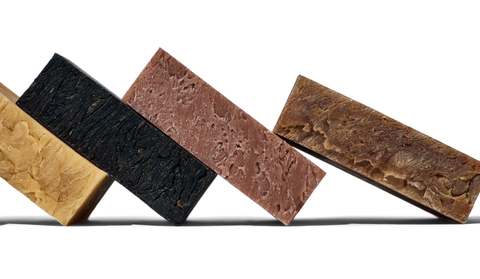

Walk into any grocery store and you'll find dozens of products labeled "soap" that contain synthetic detergents, artificial preservatives, and chemical lathering agents. Most of them have been on the market for decades. Most men have never questioned them. That's understandable — but it's worth knowing what you're actually putting on your skin every day.
Natural soap is different in ways that matter. Here's what it actually is, how it's made, and what separates it from the bars that dominate the drugstore shelf.
The Basic Definition
Natural soap is made by combining natural oils or fats with an alkali — typically sodium hydroxide, also known as lye — through a chemical process called saponification. The oils provide the cleansing and moisturizing base. The lye triggers the reaction that turns those oils into soap. By the time the process is complete and the bar has cured, no active lye remains in the finished product.
The result is a genuine bar of soap — not a detergent, not a synthetic cleanser dressed up in natural packaging. Real soap, made from real ingredients.
What Goes Into a Natural Soap
The base oils are where most of the skin benefit comes from. Common oils in a natural soap include olive oil, coconut oil, shea butter, castor oil, and sunflower oil. Each brings something different to the bar — coconut oil produces a rich lather, olive oil is gentle and conditioning, shea butter adds moisture and density, castor oil helps bind the lather together.
Beyond the oil base, natural soaps often include additional ingredients that serve a specific purpose — pumice or sea salt for exfoliation, activated charcoal for drawing out impurities, aloe vera for soothing and hydration, goat's milk for its naturally occurring fatty acids and vitamins.
What you won't find in a well-made natural soap: synthetic detergents, artificial preservatives like parabens, or chemical additives that exist to cut production costs rather than benefit your skin.
How Scent Fits In
This is where "natural" gets more nuanced — and where a lot of brands get vague.
Essential oils are the most natural way to scent a soap. Extracted from plants through steam or water distillation, they carry the scent and character of the source material. A bar scented with cedarwood essential oil smells like cedarwood because it contains actual cedarwood extract.
Fragrance oils are lab-created scent compounds, which makes them technically synthetic. But the category is wide. Quality fragrance oils, formulated without harsh chemicals or known irritants, are used by many natural soap makers to achieve scents that essential oils alone can't produce — certain citrus notes, aquatic profiles, complex blends. A bar that uses skin-safe fragrance oils isn't in the same category as a commercial body wash loaded with synthetic chemicals. The distinction is worth understanding.
An honest brand will tell you what they use. Many well-made natural soaps use a combination of both.
Natural Soap vs. Commercial Soap
Most commercial bars aren't technically soap at all. They're synthetic detergent bars — formulated with chemical surfactants that strip the skin of its natural oils. They lather aggressively and rinse clean, which feels effective. But the stripping effect is real, and it's why so many men reach for moisturizer after a shower.
There's another factor worth knowing. During saponification, natural glycerin is produced as a byproduct. Glycerin is a humectant — it draws moisture to the skin and keeps it there. Commercial manufacturers typically extract that glycerin to sell separately, leaving behind a bar that cleans but doesn't condition. Natural soap retains it. That's one of the primary reasons natural soap feels different on the skin — and why it actually moisturizes rather than just cleansing.
What "All Natural" Actually Means
There's no regulated standard for the term "all natural" in soap. Any brand can put it on a label. What matters is what's actually in the bar.
A soap made from natural oils, free of synthetic detergents, artificial preservatives, and harsh chemical additives is a natural soap — regardless of whether it uses essential oils, skin-safe fragrance oils, or both for scent. The oils, the process, and the absence of harmful ingredients are what define it.
When you're evaluating a bar, look at the ingredient list. If it reads like real ingredients — oils, botanicals, natural additives — you're in the right place. If it reads like a chemistry textbook, you're probably looking at something else.
Why It Matters for Men
Men's skin is different from women's — generally thicker, oilier, and subject to the daily stress of shaving. A soap that strips rather than conditions works against that. A well-made natural bar, built on real oils and retaining its natural glycerin, cleans effectively while leaving skin in better shape than before you stepped in the shower.
Most men don't think about their soap. The ones who switch to a well-made natural bar usually notice the difference quickly — and don't go back.
Bearsville makes cold process natural soap for men — handcrafted with no harsh chemicals, built on a base of quality oils, and scented with essential oils or skin-safe fragrances depending on the bar. Not sure where to start? See our BEST SELLERS here.
Browse our SOAP BAR COLLECTION here.