
Natural soap bars are better for your skin than most big brand alternatives - but not because of marketing claims or because they're "natural." They're better because of how they're made, what stays in them, and what's been left out. The difference is structural, not cosmetic.
Here's what actually separates them.
What Big Brand Soap Actually Is
Most bars from major commercial brands aren't soap in the traditional sense. They're synthetic detergent bars - built on compounds like sodium laureth sulfate rather than saponified plant oils. These clean effectively, but the FDA actually prohibits them from being labeled as soap, which is why most commercial bars use terms like "beauty bar" or "body bar" instead.
The distinction matters because synthetic detergents and real soap clean through different mechanisms and have different effects on skin. Detergent bars are engineered for lather performance and shelf stability. Real soap is the result of a chemical reaction between oils and lye that produces something that cleans and conditions simultaneously.
The Glycerin Problem
Here's where the practical difference shows up most clearly.
Saponification - the reaction that makes real soap - produces glycerin as a natural byproduct. In a small-batch natural bar, that glycerin stays in. It acts as a humectant, drawing moisture toward the skin and keeping it there after washing. It's a significant part of why natural soap feels different on skin.
Commercial manufacturers extract that glycerin and sell it separately - it's a valuable ingredient in lotions, skincare products, and pharmaceuticals. What goes back into the bar is often a synthetic substitute. The bar cleans, but the element that would have supported the skin's moisture balance has been removed and sold.
The tight, stripped feeling that many men associate with showering isn't inevitable. It's a consequence of using a bar that has had its conditioning properties engineered out of it. What Is Glycerin in Soap — And Why Does It Matter?
The Ingredient List Tells the Story
A natural bar built on saponified plant oils has a short, readable ingredient list. Saponified coconut oil, saponified olive oil, saponified shea butter - each one tells you what went into the formula and what the reaction produced.
A commercial detergent bar typically lists sodium laureth sulfate, synthetic lather boosters, artificial preservatives, fragrance compounds formulated for shelf stability, and colorants derived from petroleum. The list is longer because the formula needs more components to compensate for what the process removes.
Neither list is inherently dangerous. But one reflects a formula built around skin performance. The other reflects a formula built around manufacturing efficiency and shelf life. Is Your Bar Soap Actually Natural? How to Check the Label
The Process Makes a Difference Too
Cold process soapmaking preserves the conditioning properties of the base oils and retains the glycerin. It's slower than commercial production - bars need several weeks to cure before they're ready - but the bar that comes out of it performs differently than one that's been manufactured at speed and scale.
Big brand soap is produced through industrial hot process methods that accelerate saponification with heat, extract the glycerin, and finish the bar with synthetic additives to restore what the process removed. The efficiency gains are real. So are the tradeoffs. What Is Cold Process Soap? And Why It Makes a Difference
Where Big Brand Soaps Have an Edge
Honesty requires acknowledging what commercial bars do well.
They're consistent. A bar manufactured at industrial scale performs the same way every time. Small-batch natural soap has more variation - in color, texture, size - because it's made from natural materials that aren't perfectly uniform.
They're inexpensive. Natural bars cost more because quality oils cost more than synthetic detergents, and small-batch production doesn't have the economies of scale that industrial manufacturing does.
They last longer on a shelf. Without the glycerin that attracts moisture, commercial bars don't soften in storage the way natural bars can.
These are real advantages. They just don't apply to what actually matters in the shower.
The Bearsville Bars
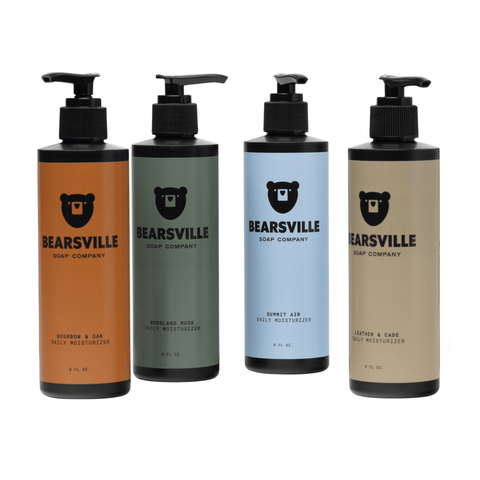
Born in the Catskill Mountains, where the landscape is rugged, the air is fresh, and craftsmanship counts for something. Bearsville Soap Company has been at this for over a decade - cold process, small-batch, glycerin intact. One bar at a time, one customer at a time. No shortcuts, no fillers, no corners cut.
Once you go real, you never go back.